One Woman One Bra: A Review
Where do you go when home doesn’t accept you?
First of all, this sounds like a PSA written in red and white, in League Gothic font, on a black background, placed at the entrance of a Charisma show.
But that’s not it.
It’s a feature film by Vincho Ngochu, her directorial debut, and it carries a layered subtext.
I caught it at Anga Cinemas at Diamond Plaza sometime back. I have things to say about the lifts in that building. One, the buttons are outside the lift. If you don’t press the floor you want to get off before you go in, you might need to start a new life there, as the lift goes up and down. Two, it’s glass. You can see everything on the streets below as it changes levels. It's dark outside, because this is Nairobi, and we don’t do streetlights here. Only lights from passing cars and digital billboards illuminated the streets of Parklands below. If you are in those lifts, especially if you are alone, like I was, you have to stand facing away from the door and take in those views.
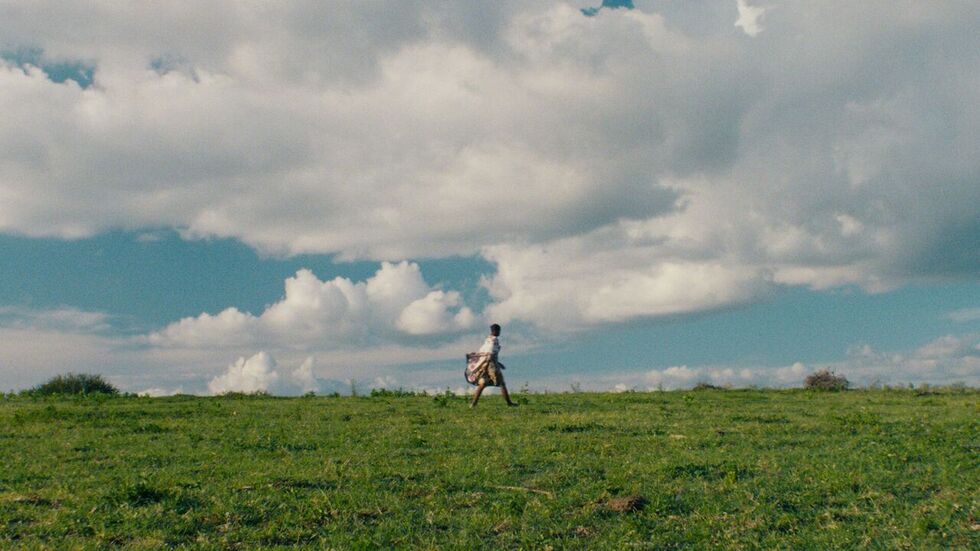
The views in the film are incredible. The cinematographer, Muhammad Atta Ahmed, used the stunning scenery of the fictional village of Sayet and its rich, colourful culture to enhance the storytelling.
The story, not an easy one to tell, is convoluted, touching on land issues, the exploitation of women, the white saviour complex, and NGO speak - don’t get me started on the NGO speak - and the narrow-minded, often out-of-touch solutions that tend to come with it. A lot is said, and even more is implied, which is one of the story's most beautiful things. It trusts you to notice what sits beneath the surface. (ha) Some of these themes feel as though they could have been pushed further. The story raises these complicated questions, but it stops just as they begin to get interesting.
When a woman says, ‘We have been mothers longer than we were girls…,’ that is left hanging. Shouldn’t we talk more about that? When Star asks the mzungu photographer how many copies of the book he has sold and how much money he made from it, that question is placed on a shelf. Shouldn’t the conversation of image rights and who gets to profit, at the very least, be introduced? And many more such moments. Still, it is understandable that the film does not dwell on these things, so the One Woman One Bra campaign feels even more absurd.
The title feels like a side quest rather than the main story, but that actually makes sense because it reflects the story’s larger point: what seems peripheral or insignificant is often what the story is really about. Ngochu is highlighting how much energy we focus on non-issues and sideshows, when the real issues we need to be talking about get swept under rugs. You know, the fight is never about the toothpaste being pressed in the middle.
Anyways.
Star, our protagonist, is a 38-year-old educated woman who returns home and tries to settle back into the village. Her return is not straightforward. She does not have a title deed to the land she occupies, and without proof of her lineage, a husband to legitimise her claim, or enough money to pay for it, she risks losing the land altogether. Her relationship with her neighbours isn’t rosy. We don’t know what the timeframe is between when she came back and when the story begins, but it is clear that she has returned to a place where her right to belong is being questioned.
She embarks on a journey to try to secure her livelihood. She tries to find her mother, but, strangely, no one in the village knows who she was. Marriage offers no easier solution: there are no prospects in sight. Soko si chafu, hakuna soko hata. She proposes a pretend marriage to a friend, but even that doesn’t materialise.
Amidst court summons, being ostracised and ridiculed, she finds her picture on the cover of a famous book, The World Book of Nomads, and tracks down the photographer because he might be the only person who knows who her mother was. He doesn’t. Her life leads her to a party where she meets an NGO director, and the One Woman One Bra campaign is born to solve all the women's issues in the village. She thought she was getting money for the idea; a truckload of bras is delivered to her instead - an action that strains the relationship she has with the village women even further.
Also, she learns how to drive in a day, the village has a projector, and a book is sold for as much as KES 30,000 in these parts. These are moments that require us to suspend belief when we really didn’t need to. The book could have cost KES 3,000; she could simply have known how to drive; the women gathered in a room could have watched the video on a phone instead of a projector.
She is forced to sell her motorbike, but even the proceeds from that are not enough to keep her home, and she ends up losing her stuff. The very neighbours come and ransack her home, leaving us with the question: where do you go when home doesn’t accept you?
So much has been written about the concept of home. It’s where the wifi connects automatically, or where you are most comfortable in your toilet seat, with the door open. It is where you know where the matchbox is, and where you know which switch lights up which bulb. It is where you can come back to from a night out and make your way to the bedroom in darkness without stabbing your small toe on the corner of a table.
Home is the familiarity in the smallest and biggest forms - the people, the particular hold of a mug, how the couch feels on your behind. It is the bonds of stories that have brought you together over years of sharing, of visiting each other, and sitting across from one another. It is where your heart is settled, and your mind is at peace regardless of everything outside. It’s belonging. It is the acceptance of the person you are, and those people around you embracing you.
Losing a home is more than losing a piece of land. It is losing the place where all these small certainties have gathered. It is losing all of yourself. But hey, that’s a small problem that can be fixed by one bra per woman, right?
---
The Kenya Film Commission selected this film as Kenya's official submission for the Best International Feature Film category at the 99th Academy Awards.