The Mother of a Martyr
Told through the eyes of a stranger, a friend and a mother, this is a story of what happens when the state meets protests with violence.
Between unnecessary Zoom meetings (that could have been emails), unfinished reports and pending approvals, your hands kept scrolling Twitter.
“Just typed the word ‘we’d’ve.’ Real contraction heads won’t be fazed by that type of deep cut.”
You smiled more than you needed to because you understood the comedy intended.
“No mechanic has started a garage called ‘vroom service’ and that is why I have trust issues.”
This one you laughed out loud, hysterically.
You kept scrolling. Everything was there: a funny joke, a distasteful one, and someone calling someone else umbwa.
Then, your algorithm caught up to the events of the day - maandamano.
“Police barricade Parliament road with barbed wire to deter protesters.”
Oh, the absurdity.
And then you saw it.
A video of a policeman shooting an unarmed protester, then walking away.
Your heart sank. You wanted to respond, to send a tweet about how cruel, inhumane and shocking that was. You wanted to say how cheap human life had become and how easily we disregard it. But your fingers trembled. Someone in the meeting was still talking about targets for the month, and you wondered if they had seen what was happening to the country.
Your blood was boiling. You paced around your living room trying to calm down, but that didn’t work.
Night came, and you couldn’t sleep. Of course, no one would be held accountable. You knew that there would be no justice and that the perpetrators would likely walk free. After all, their boss is someone known for ignoring court orders and lying under oath.
You cried for your country, and the helplessness you felt was amplified when you learned that more people lost their lives to police brutality. In bed, you couldn't stay still; you couldn't sleep.
That video plays in your head over and over again.
***
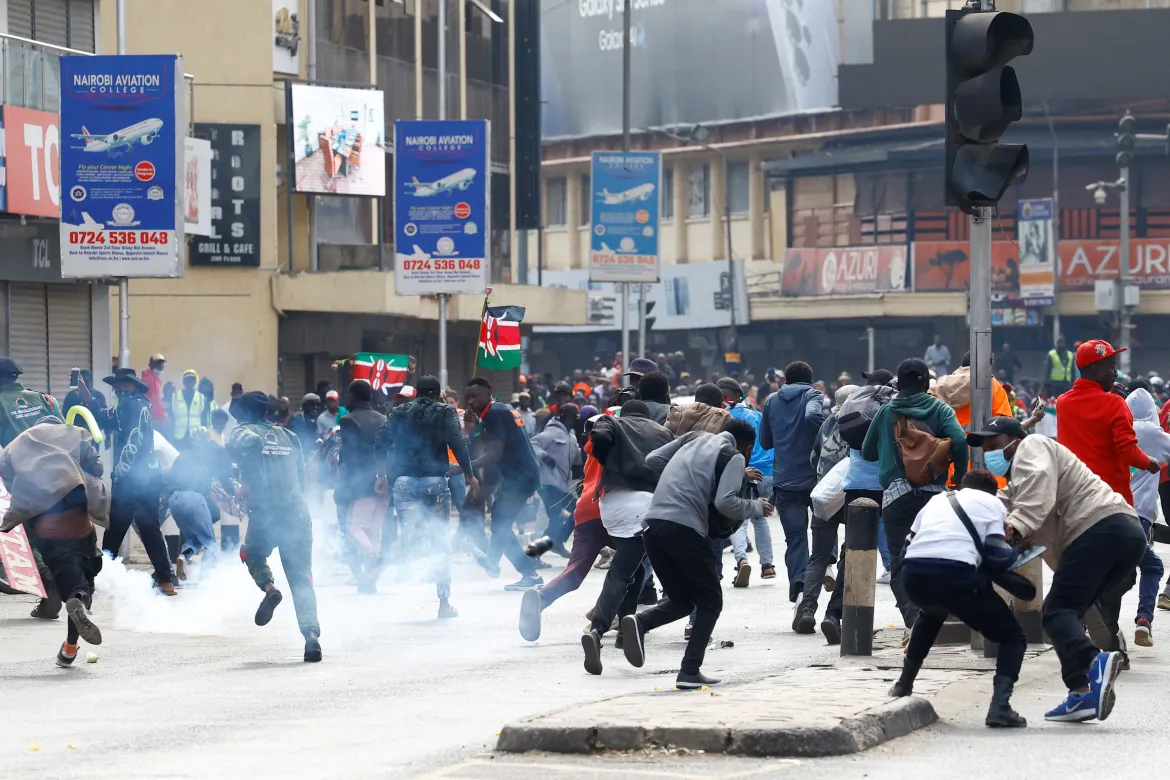
We were separated when the loud blasts of gunfire - a mix of live bullets and tear gas, because that’s just how we do things here - hit the air. We ran for our lives, everyone scattering in different directions.
You never think about how deafeningly loud those shots are when you go to the streets for a protest, especially as a first timer. You never think about the sting of the tear gas on your eyes and nose. You never think of the discomfort the baby reveal water causes on your skin. You never think about just how much running you will need to do.
Of course, you know the importance of staying tight together and not separating. You know you are your brother’s keeper. It only makes sense. These are just the basic protest protocols everyone is supposed to know.
I was supposed to watch his back. He was to watch mine.
That’s what we talked about as we left home. We ate a heavy breakfast because we knew it’d be a long day. He made fun of my shoes as we filled our water bottles in their kitchen. In the matatu ride to town, we talked about places we’d meet in case we got separated. We shared our live locations so that we could track each other. These are the basic safety protest protocols everyone is supposed to know. Which, really, shouldn’t even be a thing in the first place.
We ranted about the government, reminded ourselves why we were going to the streets, and as the matatu came to a stop, we hoped - for once - to be heard.
We were worried and anxious, but our faces showed brevity. After all, we are a generation known for our fearlessness. As we joined the crowds, we got bolder, and our chants got louder. Our voices were amplified by the flags we raised over our heads.
They were harmless chants, cries for justice and voices wanting to be heard.
To be heard - that strange, stubborn thing.
It's not about attention. It’s about proof that we exist. That we are more than background noise in a country that pretends not to know our names. In a country that threatens us not because we’re loud, but because they don’t want us to speak of their evil.
But we will speak because silence is complicity.
To be heard is vital for us because we have things to say, important things. And they can no longer use that tired trope about leaders of tomorrow. We want them to hear us because they have been terrible at their jobs.
We were on the streets because we wanted to be heard.
We wanted their ears, but they responded with the loudness of their guns as they fired canisters and live bullets at us.
Instead of listening, they told us we don’t matter.
Instead of listening, they told us we were making meaningless noise.
Instead of listening, they invalidated our anger, our grief, and the pain we collectively carried because of their decisions.
Instead of protecting us, they met us with violence.
That’s when my friend and I got separated.
I ran for my life and hoped he was right on my heels, or even ahead of me. I ran because running was the only thing I could do. I ran because I was afraid, afraid of bullets. And I ran until I could no longer hear the sounds of guns firing.
A chopper was circling the skies.
When I caught my breath, I went to our rendezvous point.
He wasn’t there.
I waited.
Minutes passed, and still, there were no signs. All this time, I had even forgotten I had my phone. I called. It went unanswered. In the distance, faint sounds of revolution still echoed. My legs were still shaking - partly from the running, partly from the fear. I clutched my water bottle tighter. My thoughts became darker as the smoke from the tear gas rose to cover buildings.
Then I checked his live location.
He wasn’t in CBD.
At first, I was angry. Why would he leave me? Why didn’t he look for me before he left?
Then I looked again.
He was at KNH.
I told myself stories. He carried someone injured there. Because that’s the kind of person he is. I had to go there.
Leaving town was tricky because the police had blocked all major exits, and they were shooting indiscriminately, especially where there weren’t many cameras to capture them. Through panya routes and a lot of luck, I got there. On foot.
I described who I was looking for at the reception, and she asked me who I was to him.
“A friend,” I said.
“Do you know any of his family?” She asked
Of course, I did.
She kept asking questions - do you know where they are, if I can contact them, etc.
With each question, my stomach twisted. My heart started preparing for the worst news. My mind moved from “he brought in someone,” to “maybe he was the one brought.”
Still, I convinced myself it couldn’t have been anything major - nothing a bandage and painkillers couldn’t fix.
"He was shot."
She said the words slowly, but my brain still couldn’t catch them. Shot. Blood. Well-wishers. Emergency room.
He was brought in on a bodaboda by well-wishers and had lost a lot of blood on the way. He took his last breath right as he was being wheeled into the emergency room.
That had to be someone else because there was no way he was gone. Death wasn’t meant for him, especially that kind of death. That kind of death isn’t meant for twenty-two-year-olds with only a degree to their names and dreams to make their mothers proud. A cruel death, an unnecessary death.
We had talked about the possibility of dying on the streets and convinced ourselves that our blood would be worth it if that’s what change demanded, but honestly, those were theoretical conversations. But even then, we had promised that we’d be by each other’s side.
I wasn’t there.
I abandoned him.
Maybe it should have been me.
Now, there’s nothing left to do but mourn. And I don’t even know how to do that. I wonder what he would be doing if the roles were reversed and I were the one lying cold on the bed, waiting to be transported to the morgue.
He didn’t deserve to die on the streets.
A son, a brother, a friend, a light-hearted, full-of-life human, gunned down on the streets, his blood soaking into the tarmac that won’t remember him, just because he wanted to be heard.
Now, I am supposed to call his mom and tell her she has lost a son.
I don’t know how to do that.
By the time I gather the courage to do it, they probably would have already heard that story on the news, if indeed this story makes it to the news.
I am here. I cannot move. I cannot cry. Because I did not think I’d end this day by having to prepare to bury a friend. I just wanted to be heard, for my voice to matter.
****
She stood by the door that morning, watching him put on his shoes.
She wanted to say 'Don’t go,' like she did the previous year when his mates were slain in the streets - but what mother says that to a son who believes in something? What mother would tell a son to stay silent when he was going to express his anger at the injustice of a nation? What mother would say no to a son who had nothing more to live for, whose dreams had been killed? After all, wasn’t she the one who taught him to stand up for what is right and speak for the voiceless?
So she did what mothers do: she tucked her fear behind a smile and said a prayer for him.
“May God cover you. May He protect you. May you return to me before the sun sets.”
That’s what she said. That was her prayer.
And then God…
God.
He didn’t cover him.
He didn’t protect him.
A bullet tore through the boy she carried in her womb for nine months. The boy whom she nursed at her breast for years, whom she gave her love and all her life to.
So what is she supposed to do with the prayers she whispered? Return them? Revoke them? Did He not hear her, or did He just not care?
She switched from “I just want my son back, before the sun sets” to “I demand justice for my son,” while preparing herself for a heartbreak because of how elusive justice is in this country.
They told her he died bravely, but she didn’t ask for bravery. She asked for him to come back home before sunset.
And now she is the mother of a martyr, a word she hates.